More results...
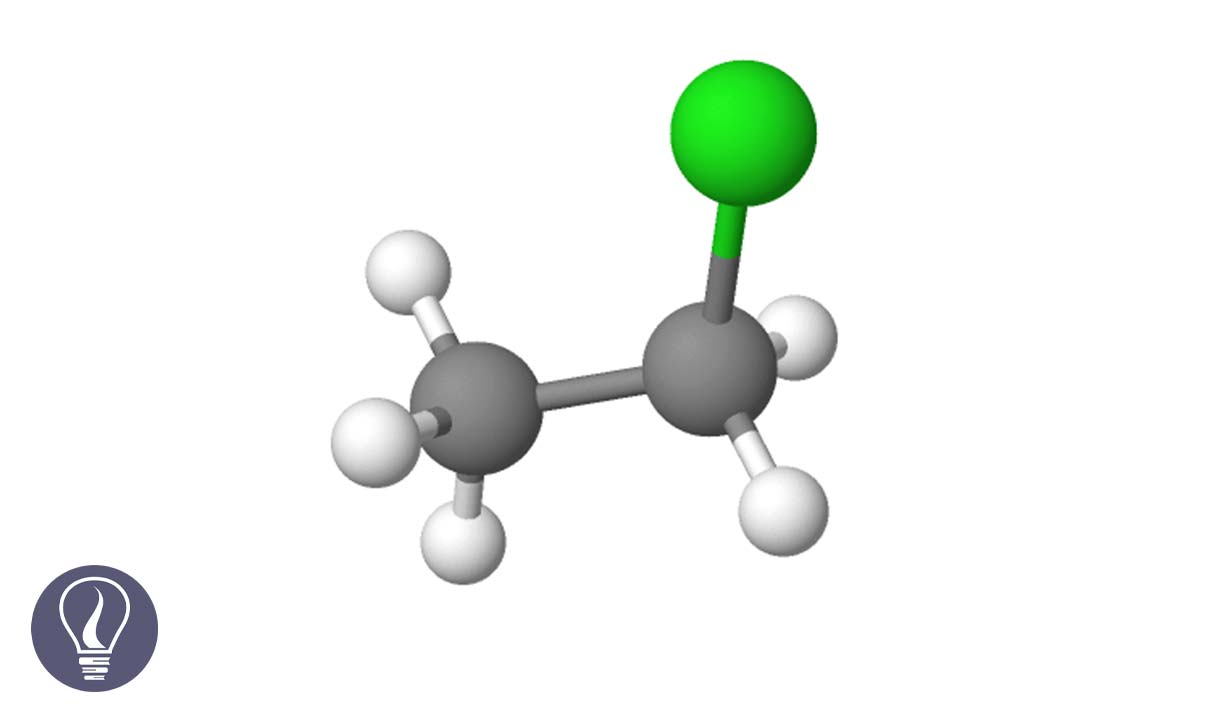

Alkyl halides, also known as halo alkanes, are organic compounds in which one or more hydrogen atoms in an alkane are replaced by halogen atoms (fluorine, chlorine, bromine, or iodine). Commonly, the halogen is indicated by the -X symbol. So, the general formula of an alkyl halide is R-X.
Alkyl halides are widely used as solvents, refrigerants, pharmaceuticals, and in organic synthesis.
Due to the halogen, haloalkanes are polar compounds. There are dipolar–dipolar interactions as a secondary interaction force in addition to van der Waals forces. Therefore, alkyl halides have higher boiling points and melting points when compared to alkenes with approximately the same molecular masses.
Although alkyl halides are polar compounds, they hardly dissolve in water due to the hydrophobic alkyl group. But they can be easily dissolved in organic solvents.
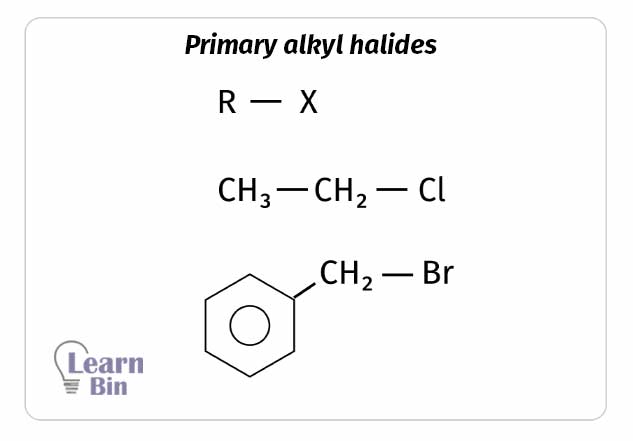
Alkyl halides are categorized into three groups: primary, secondary, and tertiary haloalkanes. According to the number of alkyl groups that are attached to the halogen-bonded carbon, alkyl halides are categorized. If the halogen-bonded carbon is attached to only one alkyl group, such molecules are called primary alkyl halides.
If there are two alkyl groups attached to the halogen-bonded carbon, such molecules are known as secondary alkyl halides.

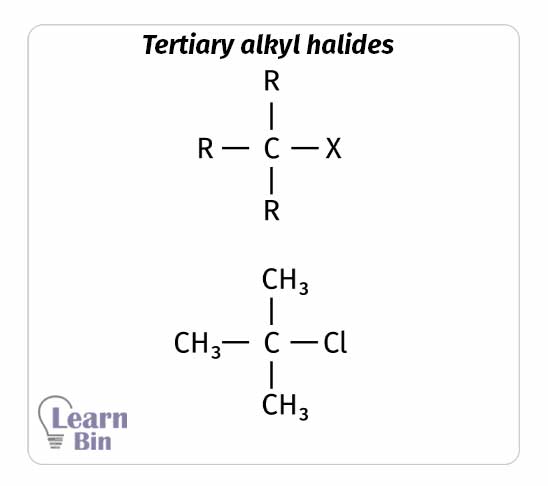
When the halogen-bonded carbon is attached to three alkyl groups, such molecules are categorized into tertiary alkyl halides.
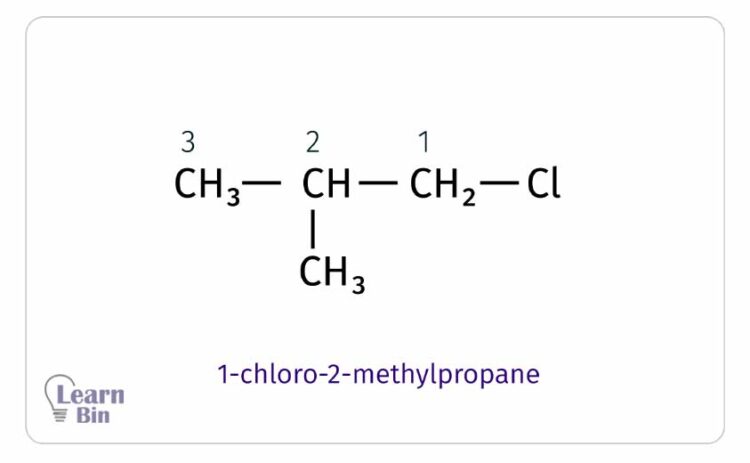
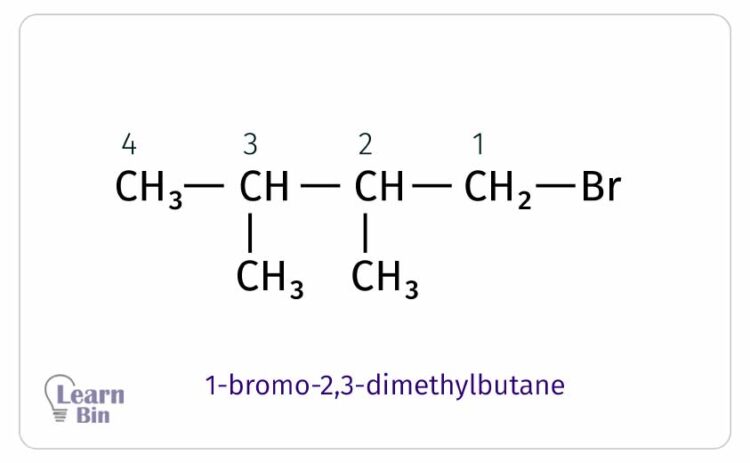
The halogen in an alkyl halide is not considered a functional group. Therefore, alkyl halides are named similarly to the alkenes. The halogen is considered a substitute for the alkane. If the alkane is attached to halogens of Fluorine, Chlorine, Bromine, or Iodine, they are named fluoro, chloro, bromo, and iodo, respectively.
In the presence of light, alkanes react with Cl2 to form alkyl chlorides. The reaction occurs through a free radical chain reaction. From this reaction, a mixture of alkyl halides results. As an example, if methane is used as the initial alkane, it can prepare a mixture of methyl chloride (CH3Cl), dichloromethane (CH2Cl2), chloroform (CHCl3), and carbon tetrachloride (CCl4)
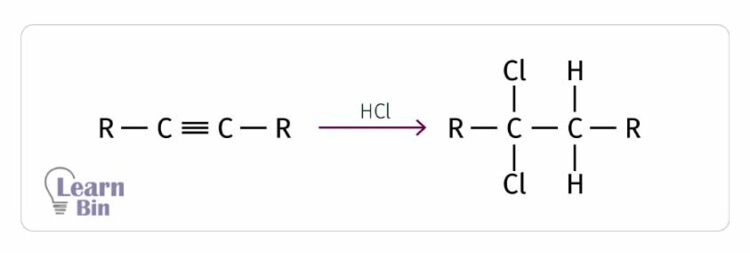
When alkenes and alkynes are treated with hydrogen halides of HCl, HBr, and HI, they undergo an Electrophilic addition reaction and form alkyl chlorides, alkyl bromides, and alkyl iodides, respectively. When alkynes are used it is added two halogens are added to each triple bond.

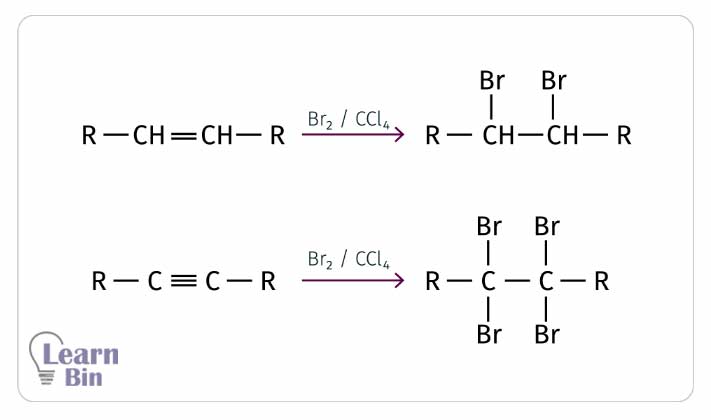
Alkenes and alkynes are treated with Br2 in the CCl4 medium. It forms alkyl bromides. One mole of double bonds is added to one mole of Br2, and one mole of triple bonds is added to two moles of Br2.
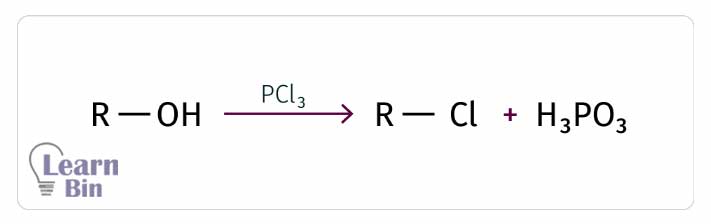
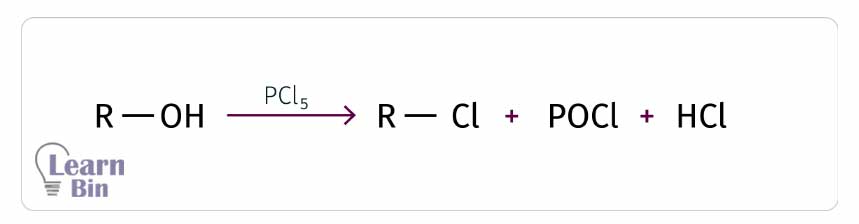
Alkyl chlorides are prepared by treating alcohols with PCl3 or PCl5. The -OH group of the alcohol is substituted with Cl and forms an alkyl chloride when PCl3 is used. Phosphoric(III) acid, H3PO3, is formed as a byproduct. If PCl5 is used, it forms POCl and HCl as byproducts.
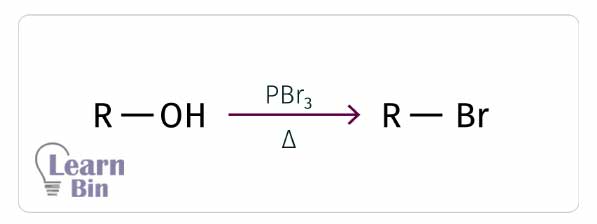
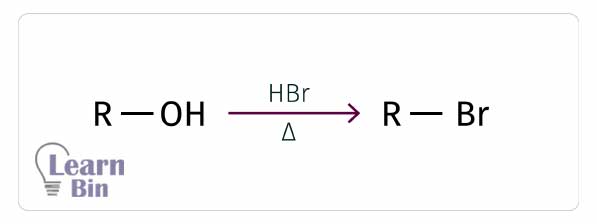
Alcohols are heated with PBr3 or HBr to obtain alkyl bromides. Here, the -OH group of the alcohol is substituted by Br and results in an alkyl bromide.
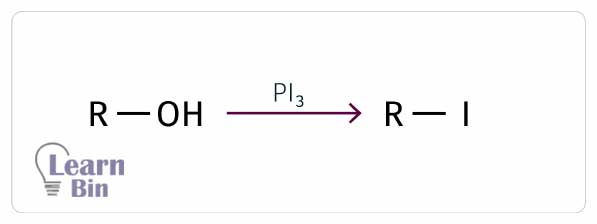
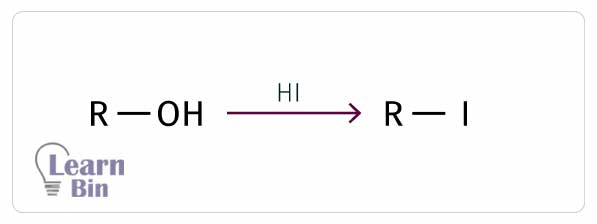
Alcohols are heated with PI3 or HI to obtain alkyl iodides. Here, the -OH group of the alcohol is substituted by Iodine (I) and results in an alkyl iodide.

The cover image was created using the molecular editor from Molview.org