More results...
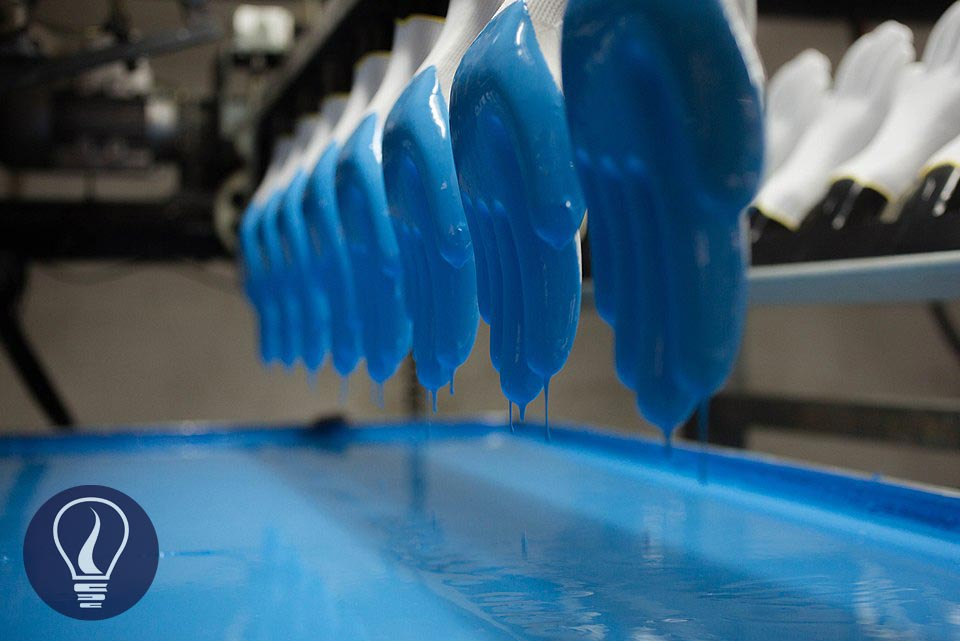
The straight dipping method is widely used in the latex industry to create thin, flexible products such as gloves, balloons, and medical equipment. In this process, a clean mold or former is dipped directly into a tank of liquid latex, allowing a thin layer to coat the surface. The former is then withdrawn and left to dry or cured through heat to form a solid latex film. But it is not as simple as it seems. There is a complex engineering background in each step of the process. In this article, we are discussing the former entry and former exit processes of the straight dipping process.
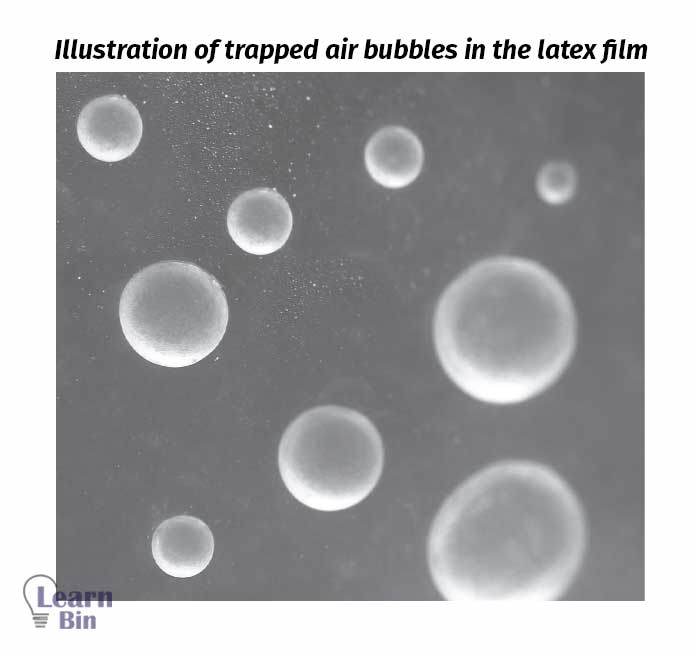
In the straight dipping process, the cleaned former is directly dipped in the former. This should be done without forming any air bubbles around the former. The major defect of the straight dipping products is the air bubbles trapped in the latex film. To prevent this defect, the speed of the former entry to the latex should be controlled.
When the former enters the latex, the former will be wet with the latex. To avoid the air bubbles, the former entry speed should be less than the wetting speed. The critical former speed can be calculated using the following equation.
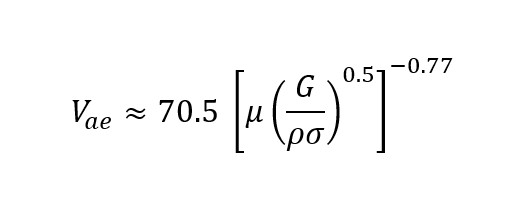
Where,
When the former entry speed is high, it will pull air bubbles into the latex. Thus, air bubbles will be formed. However, the air entrainment on the former entry is not normally a problem when glass or porcelain formers are used with normal latex formulations. But if there are any undercuts or any other potential places where air can be trapped, the former entry speed should be controlled.
As an example, in glove manufacturing, air bubbles can be trapped in the crotch between the fingers. In such a situation, the former entry speed should be controlled.
Sometimes the latex surface dips down when the former enters the latex. It seems the latex is reluctant to wet the former. This happens when the latex surface is not clean enough. Also, in some situations, the latex surface will climb up the former when the former enters the latex. This happens when the former is damp. However, a slight dampening of the former is not normally a problem.
Because wet formers do not cause any defects in the latex film. But it should be avoided if it is possible because wet formers add an extra amount of water to the latex. So, it will affect the viscosity and the total solid content of the latex. Therefore, it is better to keep the former clean and dry. A clean and dry former will be wet with the latex evenly and smoothly.
Unlike the former entry speed, the former exit speed is an important factor in the straight dipping technique. Because the former exit speed affects the thickness of the film. The amount of the latex that coats the former is generally known as the “Pick-up” Faster the exit speed, the greater the pick up (a greater amount of latex will coat). This is because the latex has less time to flow off from the former.
Therefore, a thick coat will be formed around the former. Conversely, when the former exit speed is low, the latex has enough time to drain down the former. So, the pick-up is low, hence the thickness is low. The rate at which the latex drains down the former controls the pick-up or the thickness of the film.
In many straight dipping products, it can be observed that there is a high thickness at the closed end and a low thickness at the open end. When compared to the bottom (closed end), the top of the article (open end) has more time to flow off the latex from the former.
Therefore, the open end has less thickness than the closed end. Conversely, the bottom of the article has less time to flow, and more latex will collect at the bottom. Thus, the thickness is high at the bottom. When an extra layer of latex is picked up, it may cause an uneven latex distribution. The problems associated with uneven distribution are poor drying and film cracking.
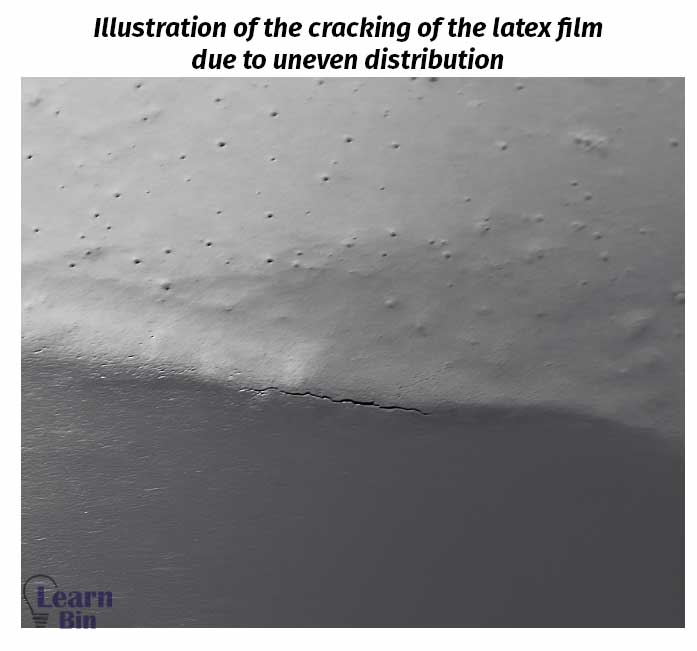
This uneven thickness can be controlled by changing the speed of the former exit. The initial stage of the withdrawal can be done more quickly than the later stage. Hence, the two parts also get a high pick-up. Then this latex subsequently drains down the bottom, resulting in an even thickness of the product.
Thickness variation not only occurs along the product but also occurs around the circumference of the product. This is caused by the induced turbulence that occurs when the formers pass through the latex. To get an even thickness, sometimes the formers will be rotated in the latex.
In the former exit, it is usual to move the former up into an approximately horizontal position. And the former will be rotated just after it has left the latex surface. This helps the latex to distribute more evenly and prevents further flow down since the latex film has already started to dry. It is better if this movement takes place as soon as the former leaves the latex surface to minimize the flow. However, the former must have left the latex surface before rotation. Otherwise, it will leave a heavy deposit at the tip of the former due to the sudden increase in the exit speed.
As the tip of the former leaves the latex surface, a “neck” is formed between the former and the latex surface. It is possible to create an air bubble when the neck breaks. Air bubbles can be created in both the latex surface and the tip of the former.
The air bubble that was formed on the former will often burst as soon as it enters the drying oven. But sometimes the air bubbles will not burst and cause some defects in the final products. Therefore, this air bubble should be burst. This can be done by directing a gentle jet of air at the tip of the former. This air jet should be directed as soon as the former has left the latex, before the film starts to dry.
But it is better to avoid the formation of the air bubbles rather than burst them. Changing the rheology of the latex and dipping conditions can remove this problem. As an example, the former speed can be slightly increased, and the viscosity of the latex should be reduced appropriately.

Hill, D. M. Latex dipping: Science and Technology; Walter de Gruyter GmbH & Co KG, 2019.
The cover image was designed using an image by Marketingdepascale, licensed under CC BY-SA 4.0, via Wikimedia Commons
Figure 01: Image generated with the help of Microsoft Copilot
Figure 02: Image generated with the help of Microsoft Copilot