More results...
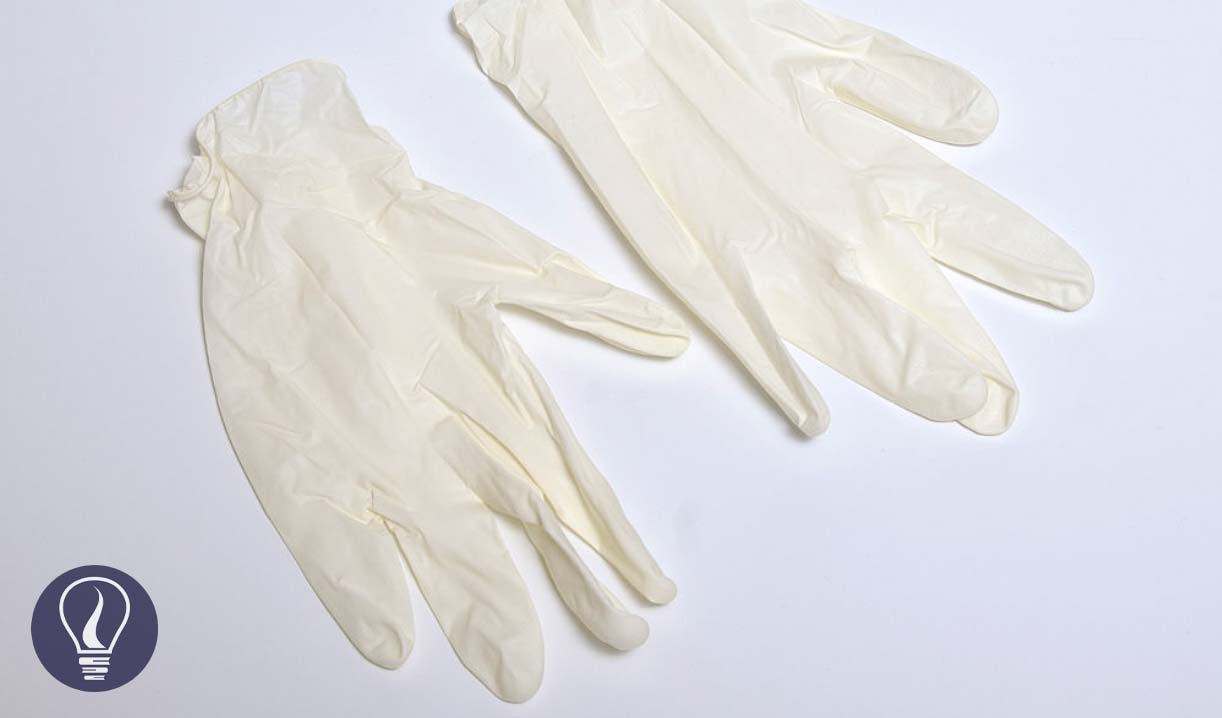
The drying process of straight-dipped latex articles is a crucial step in producing straight-dipped latex products. After dipping, the coated former should be dried gradually to remove moisture and strengthen the latex film. Drying is typically done using warm air or heat ovens.
This must be done in a controlled manner, because overdrying or underdrying causes several defects in the final product. Uniform drying ensures uniform thickness, enhances product durability, and prevents defects like cracking or uneven surfaces. This step is essential for producing high-quality latex products with the desired flexibility and strength.
After the latex dip, the formers are transferred to the oven to dry the product. The production can be a batch plant or a chain plant (continuous plant).
In a heating tunnel or a heating chamber, there is a gradient of temperature. For heating, it uses radiant heaters or hot air circulation, and maybe both.
The design of the oven is important because it should be small enough to minimize the heating cost, and it should be large enough to accommodate a large number of formers. The drying stage must be compatible with the production speed. To increase the drying speed, it can be dried at high temperature for a short time. In that case, the oven can be small. But when it is applied at a high temperature, it may cause skinning and excessive drying of the film.
At the entry and the exit of the ovens, there should be enough space for the formers to enter and exit without hitting the walls of the oven. Also, there should be enough space between the formers. But this space must be small enough to minimize the heat loss. To control the rate of drying, it maintains different temperature zones within the drying tunnel. Also, the entry apertures and the exit apertures must be sized correctly.
In a heating oven, it uses individual heaters that cover different zones of the formers, like bead area, central area, tip, and so on. These heaters are placed at the bottom, top, or sides of the oven. But there is a possibility of the latex to drip off from the formers onto the heaters if the heater is placed at the bottom of the oven. It causes the burning of the rubber and releases a smoke with the smell of burning rubber.
This may happen in a chain plant if the production line is stopped for any reason. In batch plants, programmed ovens are utilized to ramp up the temperature. They can control the rate and the efficiency of drying. After the drying process, a cooling zone is used before any subsequent operations.
The latex in the subsequent dipping tanks has a lower Total solid content (TSC) than 40%. This means it has a higher water content up to 60%. Therefore, a large part of the pickup is just water. This water will be lost in the drying process. Thus, the film shriks on the former. Sometimes, this shrinkage causes film cracking if the wet gel strength of the elastomer is not high enough. Also, it makes the stripping (removing the final product from the former) more difficult.
Other reasons that make the stripping more difficult are high pick up and aggressive drying (high temperature – short time drying) or over-drying. In this case, the latex film adheres more strongly to the former, and it will be difficult to strip off.
Among these reasons, over-drying is the most common reason. Overdrying also happens due to aggressive drying. In the aggressive drying process, the outside layer will be dried up while the inside layer is still wet since the temperature is too high. When the underlying layer is drying up, water will be vaporized, forming air bubbles. This makes holes in the products. This failure can usually be observed in the thicker areas of the product.
Therefore, it is necessary to control the temperature of the oven. It uses thermocouples or infrared monitoring to control the film temperature. Typically, the temperature range of these ovens is between 60 °C – 100 °C. Sometimes, the temperature may be a little bit higher when using materials like CR latex.

Hill, D. M. Latex dipping: Science and Technology; Walter de Gruyter GmbH & Co KG, 2019.
The cover image was designed using an image by Nadina Wiórkiewiczpl, licensed under CC BY-SA 3.0, via Wikimedia Commons