More results...
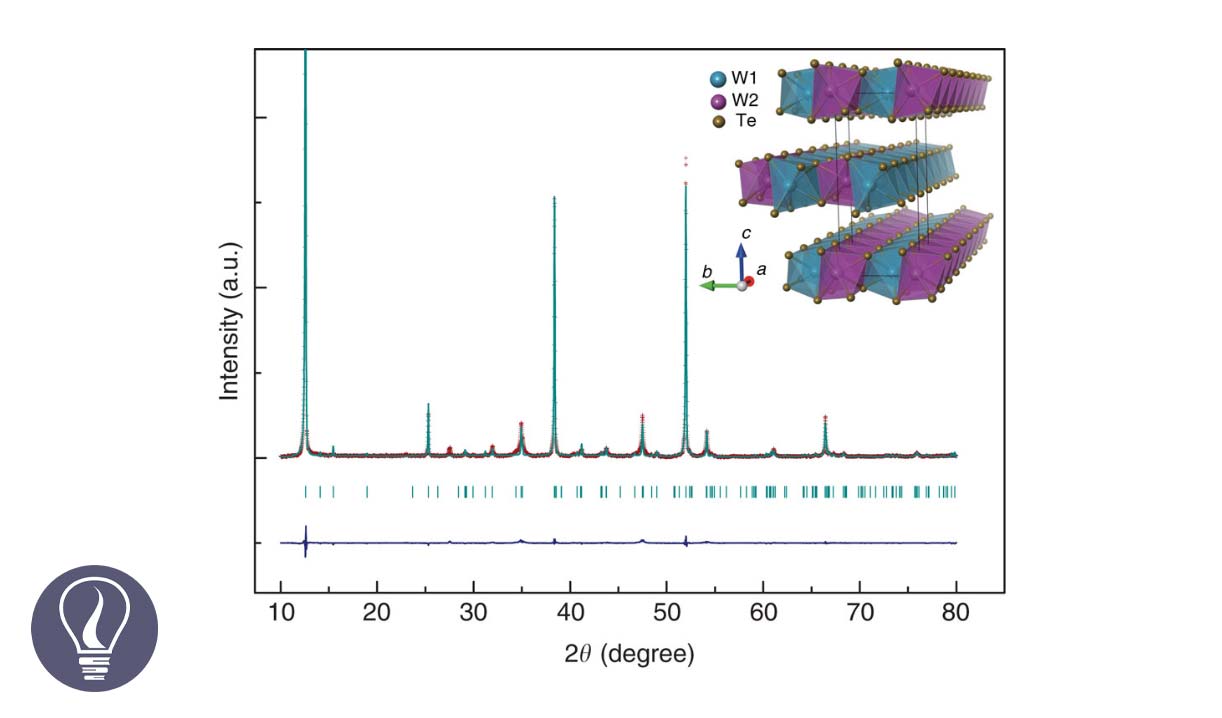

X-ray diffraction (XRD) is a foundational analytical technique used to determine the atomic and molecular structure of a material. It relies on the interaction between X-rays and the ordered arrangement of atoms within a crystal to reveal information about its internal structure.
To understand diffraction, we must first understand the probe we are using: X-rays. X-rays are a form of high-energy electromagnetic radiation, occupying a place on the spectrum between ultraviolet light and gamma rays. Their high frequency (roughly 1016 Hz to 1019 Hz) corresponds to high energy (ranging from 100 eV to 100 keV).
Like other electromagnetic radiation, X-rays are also made out of photons. The energy of a single X-ray photon (quantum of X-ray) can be calculated using the Planck-Einstein relation:
E = hν
Where,

X-rays are produced when a high-energy electron beam interacts with the atoms of a metal target. During this interaction, X-rays are emitted as a result of the released energy. They arise mainly from two processes: bremsstrahlung radiation, produced when electrons decelerate upon striking the target, and characteristic X-rays, emitted when inner-shell electrons are ejected and replaced by outer electrons.
In X-ray diffraction instruments, X-rays are generated in an X-ray tube, which consists of two metal electrodes enclosed in a vacuum chamber.
One electrode is made out of tungsten, and it acts as a cathode. By heating it (the cathode is a heated Tungsten filament), electrons are produced. Because of the high potential difference between the anode and cathode, the produced electrons are accelerated toward the anode. These beams of electrons will collide with the anode at a high velocity. This process will release X-rays from the anode. Only about < 1% of the initial electron beam will convert to X-rays, and the rest will convert to heat energy.
The anode of the X-ray tube is water-cooled due to the large amount of heat generated and is made of metals such as molybdenum.
This is just a brief description of the X-ray production. There is a much more complex process that happens in the process of X-ray production.
For X-ray diffraction studies, the useful wavelength of X-rays is between 0.05 nm to 0.25 nm. (because usually, the interatomic spacing of a crystal is around 0.2 nm.)
The true power of XRD comes from how X-rays interact with the periodic structure of a crystal. Solids can be categorized by their atomic arrangement into three types:
XRD is primarily concerned with crystalline materials, which possess a long-range, ordered, and repeating three-dimensional arrangement of atoms known as a crystal lattice.
You can imagine this lattice as a series of parallel planes of atoms stacked on top of each other. When an incoming X-ray beam strikes the crystal, some X-rays will be scattered by the atoms in each of these planes.
This is where the phenomenon of wave interference becomes critical. The scattered X-ray waves can interact with each other as they travel away from the crystal.
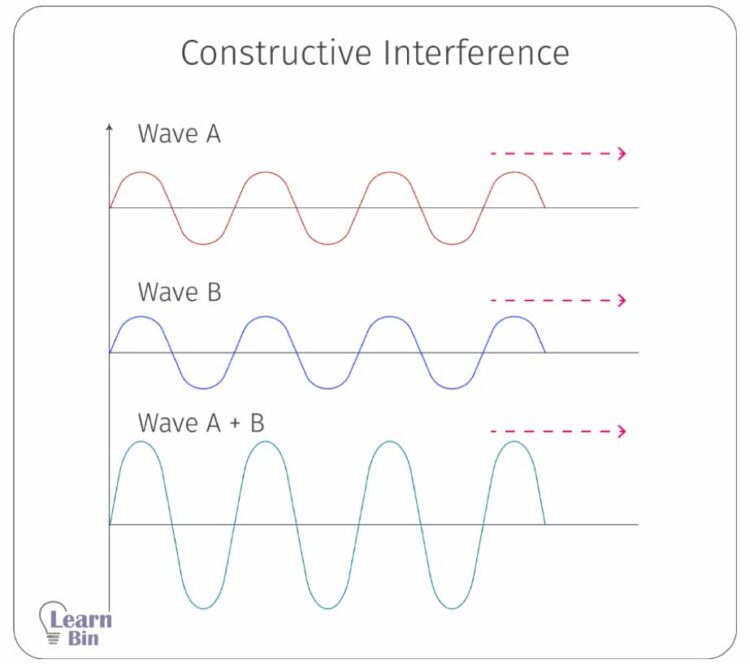
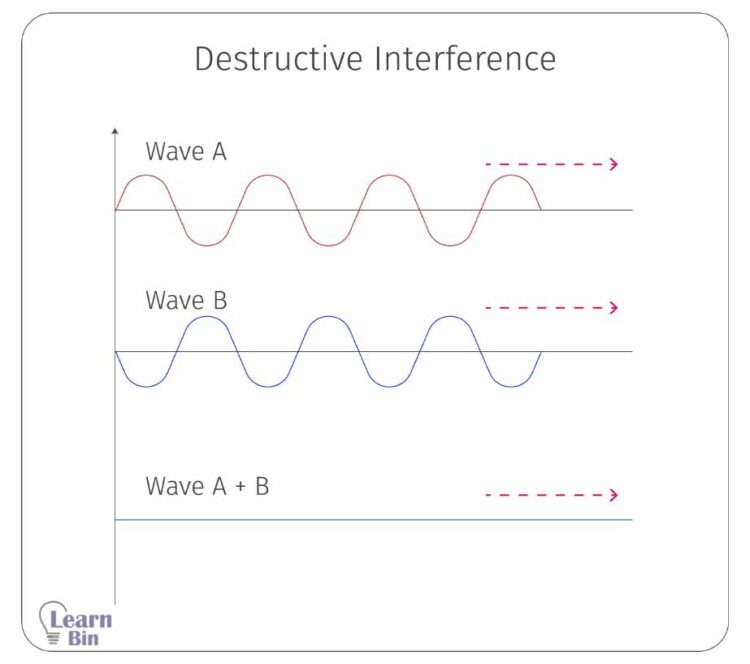
Diffraction is simply the pattern of intense, constructively interfered X-rays that emerge from the crystal at specific angles.
In 1915, Sir W.H. Bragg and his son Sir W.L. Bragg developed a simple but elegant equation to explain why X-rays reflect off crystal planes only at specific incident angles. This relationship, known as Bragg's Law, provides the mathematical condition for constructive interference to occur.
The law states that for constructive interference to happen, the total path difference traveled by two X-ray waves scattering from adjacent planes must be equal to an integer multiple of the X-ray wavelength.
The equation is given as:
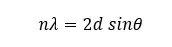
Where:
If the X-ray beam strikes the crystal at an angle θ that satisfies this exact condition, a strong diffracted beam will be observed. At any other angle, the scattered waves will interfere destructively, and no signal will be detected.

The discovery of XRD and Bragg's Law was revolutionary. It provided the first direct evidence for the existence of periodic atomic structures (crystal lattices) and gave scientists a tool to measure the distances between atoms with remarkable precision. For their work in analyzing crystal structure by means of X-rays, Sir W.H. Bragg and Sir W.L. Bragg were jointly awarded the Nobel Prize in Physics in 1915.
While the theory of XRD applies to any crystalline sample, specific techniques are needed to analyze different material forms. One of the most common applications of this principle is X-Ray Powder Diffraction (XRPD), which is ideal for studying polycrystalline materials.

Vickerman, J. C.; Gilmore, I. S. Surface analysis – the principal techniques; 2009. https://doi.org/10.1002/9780470721582.
The cover image was designed using an image by Defen Kang and others, licensed under CC BY 4.0, via Wikimedia Commons